
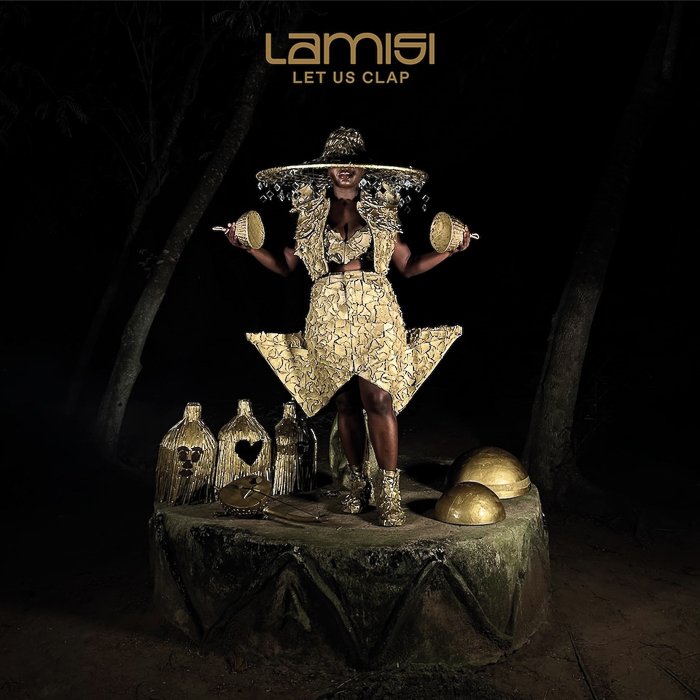
Lamisi’s single “Painkiller”, the closing track on Let Us Clap, came together in the room through a xylophone line, a chant and hands clapping. Built on northern Ghanaian clapping patterns and spare electronics, it treats music as medicine that is functional, communal and necessary. Made in Accra with activist-producer Wanlov the Kubolor, it closes the album with a simple insistence, that this is what carries us through.
Newest Real World Records signee Lamisi — one of Ghana’s most popular artists and an activist for the rights of women and girls — has shared the second single from her forthcoming new album Let Us Clap — a collaboration with innovative music producer and auteur Wanlov the Kubolor, which marks a radical reinvention of her sound.
‘Painkiller’, the album’s closer, is a rollicking paean to the power of music: “We were wrapping up one day when Sowah started messing on the xylophone and I started chanting ‘Music is a painkiller’,” says Wanlov. “Then Lamisi joined right in and started clapping along…” Let Us Clap, then. Lamisi. Wanlov. The clapping patterns of northern Ghana. The digital wizardry of contemporary African music. Love and unity. Tradition and change.
“This music is fresh,” says Wanlov the Kubolor, the project’s musical director, and a Ghanaian/Romanian artist, activist and film-maker so well known in Ghana that — particularly in busy, sprawling Accra — he
stops traffic. “It’s magic music. It is the world that we are coming from.”It was a slogan painted onto the back of a public bus in Accra that inspired ‘No Orgasm in Heaven’, the
album’s clap-happy first single. “I like working with funny, open-minded people,” says Wanlov, who is also renowned as one half (with M3NSA) of beloved musical pranksters Fokn Bois. “This song has a similar sentiment to ‘No Beer in Heaven’, the 2004 hit by Atongo Zimba. It means enjoy your life now, as heaven is right here.”
Wanlov’s activism for the rights of LGBT+ people in Ghana is consistent and fearless; with his sibling, the television presenter/model Sister Deborah, and Angel Maxine, the first openly transgender Ghanaian
musician, he has used his music to push back against homophobia. His causes — environmentalism, decolonisation, female empowerment — have the people at heart, and fire his own socially conscious music
with its trademark satirical raps. With a sound rooted in the urban scene, and in rap and hip-hop, forward thinking is Wanlov the Kubolor’s stock-in-trade.
“Lamisi and I are pushing the limits of what traditional acoustic instruments could do, using the handclaps as the basis for the songs,” he continues. “We wanted to treat her vocals electronically, which is a sound that’s heard all over Ghana, even in the villages.”
At a time in history when rollbacks on gains made in feminism and women’s rights are commonplace, Let Us Clap also serves as a reminder that vigilance — and action — matters. “I was raised with girls from northern Ghana who would drop out of school to get married and have children. My mother wed at 13 and had six girls,” she says. “Some of my late father’s family basically ignored us all because, for them, it was only boys that mattered. I was fortunate to receive an education and have worked hard to live my dreams. But these girls don’t have the same opportunities. I want to champion their unheard
voices.”
‘Let Us Clap‘ Tracklist
1. Agol
2. Zane Ya Kinkin
3. No Orgasm In Heaven
4. Tumsum5. Come
6. Salma Daka
7. Nisaal
8. Unity
9. Painkiller