
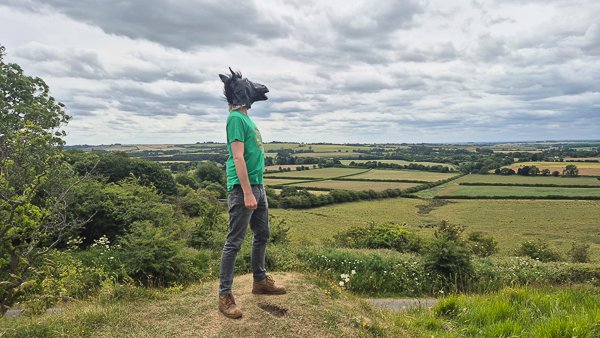
A year after the release of ‘The Red Hill EP’, Linconshire shoegaze band Corasandel return with their most expansive release to date, the double A-side single ‘FYN’ and ‘Lost in the Wolds’. On FYN we hear the band expand their sound by incorporating more electronica to their spiralling shoegaze sounds. The result blends the Madchester danceability of the Happy Mondays and Stone Roses with the more psychedelic moments of Primal Scream. FYN is the sound of an unseen force pulling you to the dancefloor for hours that disappear in minutes, before you realise the sun has come up and its rays are filling the room like laser beams. As if that wasn’t enough ‘Lost in the Wolds’ is born of FYN, a dubbier, trippier sibling. Applying a William Burroughs cut and paste method, the band dissected the song, running loops through infinite delays, creating space for Esme’s ethereal vocals to guide you through the sense melting sonic haze. Shoegaze, dance music and electronica have always been easy bed fellows but on new double A-side, Corasandel show us that there’s still something new to be said, releasing two tracks that feel as one, and could both easily stretch out into infinite oblivion.
ABOUT CORASANDEL
After having met at a range of different parties, record stores and festivals, Jimmy (electric guitar/fx) and Mark (guitar/vox) started writing together in 2016. Then around the time of their first EP ‘All the Hours Are One’ they slowly began inviting the rest of the band into the fray, completed by Holly(bass), Chris(keys, synths and beats) and Esme on effected vocals. Since then the line up has remained unchanged as each member brings their own unique voice and contribution to the band. Their sound blends shoegaze, electronica, dream pop and folk, in a way that feels fresh and organic. It’s the relationship between the players that is at the heart of the bands sound. Meeting every week in their own studio to write, the band feed of the energy in the room, achieving a sound that wouldn’t be possible through file sharing, or working hunched over a laptop in isolation. The band say its about being present, open and willing to play in every sense of the word. Taking their name from Norwegian author Cora Sandel, whose writing explored the ideas of pushing against the constraints of social norms, while exploring identity and independence. It seems a fitting monicker and way to honour the writer.
ABOUT “FYN”
‘FYN’ grew out of one of the band’s studio jam/writing sessions, with Mark’s solo opening being the catalyst for the fire in this instance. Chris’s break beat provided the heart beat for the song, while Holly’s bass part both insistent and celestial provided the anchor for the song. It was left to Jimmy to add swirling guitars to the track, reaching into his not unsubtantial collection of guitar pedals before Chris’s piano further amplified the vibe the band were going for, Esme’s soaring vocals that sound like an echo from space or a call from beyond time. 30 minutes the band were done and the track was complete. An instance when it feels like the song is being given from somewhere beyond the people in the room, a hand guides fingers on the fret board or across keys and vocals channel voices beyond their own. The band say “The song reaches to the past “calling our ancestors to be our friends” comments on the current social and politically turmoil of now “when I was younger I thought that things would move on” and tries to find hope for the future. Our Ancestors are important: both the recent ones who we’ve lost in our lifetime, but also those further back in deep-time, calling on them for help in troubled times.” The band then refined the song over numerous live outings and watched as the song pulled the crowd to the dancefloor, seeing people get lost in the music. The crowd became the uncredited song writer for FYN as their reaction helped the band lean more and more into the dance/electronic influence.
ABOUT “LOST IN THE WOLDS”
As the band wrapped up recording ‘FYN’ someone suggested a dub version. Working out of Chris’s home studio he built, (“a maze of synths, cables, guitar pedalboards and mics”) gives the band the time and space to experiment and not be held accountable by a clock that racks up costs as the second hand ticks away. Applying a similar technique from famed Beats writer William Burroughs, the band started chopping up sections of the song, splicing riffs into loops that triggered infinite delays. Recontextualising parts and instruments gave them new meaning and opened the new sonic doors for the band to go through. The songs share the same DNA but occupy different spaces, listened to back to back they could easily be as one but each