
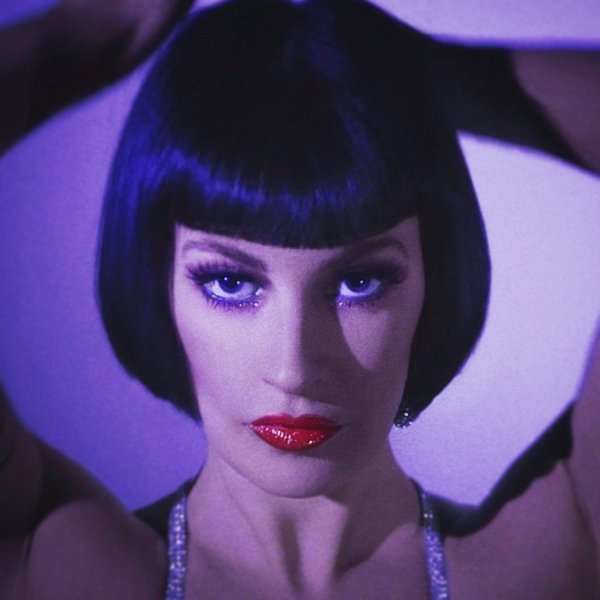
Irish composer, producer and multidisciplinary artist Laura Sheeran returns with ‘D’Arcy’s March’, the second single from her forthcoming album PERSONA [Fighter] and her second collaboration with world champion boxer Katie Taylor, following the release of Red Woman.
The track features Caitriona Frost on snare drum, while sounds recorded with Katie Taylor are woven into the rhythm section, with Taylor’s boxing percussion layered into the kick drum itself. Additional vocals are provided by Leela Barron, whose repeated refrain, “We Need a Revolution”, becomes the song’s rallying cry.
In its extended outro, the track evolves into a dense and unsettling sonic landscape reflecting global instability and social unrest. Protest field recordings sit alongside car horns, whistles and environmental sound design. Samples include recordings inspired by community whistle networks used by Minneapolis residents to alert neighbours to the presence of ICE agents in their neighbourhoods. Beneath the surface, references to climate collapse and modern warfare drive the piece towards its apocalyptic conclusion.
D’Arcy’s March was written, produced and recorded by Laura Sheeran, and mixed and mastered by Brian Bolger at Third Ear Studio.
The release forms part of Persona: Fighter, one chapter within Sheeran’s ambitious multidisciplinary project The Persona Project.
Laura Sheeran on D’Arcy’s March:
“I started writing the music for D’Arcy’s March in autumn 2024, while I was performing in Grania at the Abbey Theatre, directed by Caitríona McLaughlin.
Dublin was, and still is, experiencing a severe homelessness crisis, and at that time there was a great deal of public hostility and dehumanisation directed towards people living in tents, including people seeking international protection. There were also far-right protests taking place regularly on the streets outside the theatre.
I remember feeling an enormous amount of anger and frustration about what I was witnessing. I was particularly heartbroken thinking about the number of children living in emergency accommodation, some facing their second or third Christmas without a permanent home.
One evening, sitting in my dressing room before a performance, I opened my laptop and started channeling all that anger into a track, building layers of glitchy noise over a relentless four-to-the-floor kick drum.
For about a year, the music existed as this raw, driving instrumental idea. I knew there was something in it, but I hadn’t yet found the right context to develop it further. It would eventually become the foundation and spine of D’Arcy’s March, but before that, it had a whole different life.
In 2025, I was commissioned to create Light Up the Castle, a large-scale audiovisual installation and public spectacle for Kilkenny Arts Festival, which was a highlight of the year.
I immediately knew that I wanted the piece to explore humanity, beginning with the birth of life before moving through the darker aspects of human history, including imperialism, colonialism, destruction and the accelerating development of artificial intelligence.
I also knew right away that the sketch I had made all those months earlier would be absolutely perfect for that section of the piece. After encountering restrictions from the OPW on displaying a Palestinian flag in the images being projected onto Kilkenny Castle, which they explained was a policy intended to align with Ireland’s official position of neutrality, I felt strongly that the song from that section of the installation should have a further life after the piece closed.
Not long after that, in late November 2025, I heard that the artist, playwright and lifelong activist Margaretta D’Arcy had died. I knew Margaretta from Galway, had always admired her activism and felt politically aligned with her.
I had most recently worked with her on Mad Bad and Dangerous, directed by Emma O’Grady, a series on which I was the editor. A standout moment from working on that series was editing the episode featuring Margaretta in conversation with Lelia Doolan. Their vibrant, stimulating conversation went on for hours, and it was one of the most challenging edits I’ve ever had to do. The extraordinary energy running through the conversation from beginning to end simply couldn’t be harnessed or reduced to anything other than what it was: a brilliant, dynamic, chaotic and intelligent conversation between two inspiring women.
Margaretta was defiant, compassionate, argumentative and courageous. She had an extraordinary force of personality and a determination that was unstoppable.
At her funeral, I was struck by the breadth of people who had come to pay their respects. People from so many different walks of life: artists, activists, politicians and many people from the marginalised communities she’d supported and advocated for throughout her life. A representative was also there on behalf of President Catherine Connolly.
People spoke about Margaretta as a revolutionary, about her refusal to back down and about her ability to say NO. Someone commented on how, if Margaretta started an argument with herself in the mirror, she’d still be standing there arguing until the end of her days because neither side would ever back down.
Throughout the speeches, one word kept coming up again and again: revolution.
And right there, it clicked. I had this song that still needed a name, a march calling for revolution. I should name it in honour of Margaretta.”
That’s how D’Arcy’s March got its name.
“I hope people will hear it, use it at protests and make it part of their own political action. I hope it will help carry Margaretta’s spirit forward and encourage people to find their own voices.
When I sing ‘We Need a Revolution’, I’m thinking about the homelessness crisis, the growing divide between rich and poor, the cost of living, our dependence on international supply chains for essentials like food and medicines, the failure of governments to provide adequate public infrastructure, the ongoing devastation of colonialism and genocide, and the unchecked development of AI technologies and their impact on the human imagination.
I believe we’re approaching a critical turning point in human history, where fundamental systemic change is necessary. We need a revolution.”
Photo credit – Laura Sheeran